By Madeleine Romeyer Dherbey (Guest Blogger)
Thanks for hosting my tour, Lisabet, and for your question: Why did I choose WWII as the period for the book?
I
was born in a small village nestled under the Vercors cliffs, an area
that saw a lot of action during WWII. It was where a couple of
dreamers envisioned a plan to build an army of resistants that would
support Anvil, the Allied landing on the French Mediterranean coast.
I
grew up there long after the liberation, on the wrong side of glory.
Three of my uncles were condemned to death for
collaborating with the Vichy government and betraying C2, a
Resistance camp located at Malleval, to the Nazis. Their sentences
were later commuted to forced labor, but the national disgrace
verdict stood, and they had to leave the area to avoid being
murdered. Despite the death threats, my father— who had fought with
honor during the war—decided to stay. The legacy, hard to overcome
in a community mauled by four years of occupation and violence, is my
first personal connection to this story.
Then,
there is the Vercors itself. Breathtakingly beautiful, dangerous, a
natural playground for all extreme sport lovers. Rock climbing,
canyoning, spelunking, skiing, it’s all there. But for me, it’s
home. It’s where my ancestors have lived and are buried, under
those same cliffs.
It
is a battle well-known to Historians and military strategists that
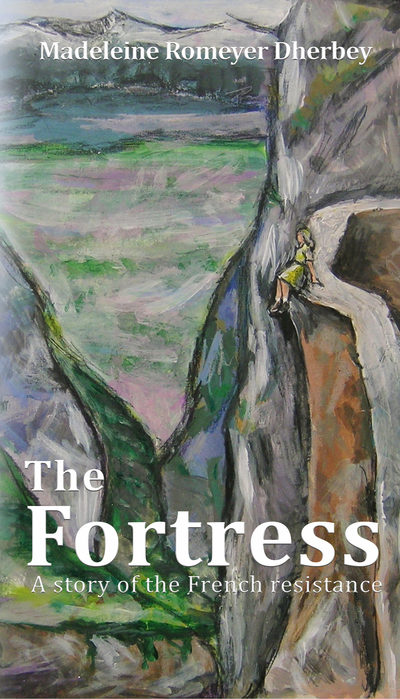
got surprisingly little artistic treatment. The Fortress is a dream
of freedom, a heroic battle, a military disaster, but also redemptive
last stand. Many books have been written on the subject, but no
fiction, and in fact, I was frustrated by the dryness of the accounts
which I felt did not reflect the human dimension of that battle.
There
are also small things, like a Sten machine gun I found in the mud of
a summer creek, with this inscription, Pour ma Suzon Cherie, June
12, 1944; or the story of a fifteen-year old boy, a resistant
fighter whose name is forgotten, who was tortured and murdered by the
Nazis in the summer of 1944.
I
wanted to do justice to
the conflicting truths of men, women, families, rivals, religions,
collaborators, communists, nationalists and simple French patriots
during the Nazi occupation of my beloved Alp mountains. The plot is
simply a way to let them speak for themselves.
But
there in the middle of my noble historical mission, a love story was
born, and once it took roots, it drove the narrative. Marc has
pledged his life to defend the Vercors, and he is a man of his word.
It is with genuine distress that he discovers his growing attraction
to Alix, and he fights it. The tension that builds
between them, driven by irrepressible feelings and conflict, is
shaped by the violence that unfolds around them, rather than
superficial sexual drama. That love story made the writing almost
hypnotic for me.

There
are no generals in the French Vercors, just a handful of men and
women against the Nazi war machine. They come from Bretagne, Paris,
and Slovenia, and the villages up on the cliff. They are the
Fortress.
Blurb
The
war has not made much of difference in Alix’s life. Her father has
seen to it that she grows up unaware, unworried, but safe in her tiny
village under the cliffs of the Vercors. All around her he has built
a fortress whose walls are impregnable—until the 27th of April,
1944. That day he makes a stupid mistake up on the cliff, and the
walls of the Fortress start crashing down. Reality breaks into Alix’s
life with unrelenting violence, unforeseen possibilities. From now
on, every decision she makes will mean life or death.
Excerpt
“Honey,
if anybody’s looking for it up here, it means you’re already
dead. So it won’t matter to you. Listen now. People will call you
on the other phone, the one downstairs, and give you coded messages.
As a rule it will be about movements in our direction, Germans,
Militia, or even new recruits for our camps. Remember, the security
of Mortval depends on you. Here is a list of codes. You must memorize
all of them and get rid of the list.”
She
started to read. “The strawberries are in their juice. Your walnuts
were wormy. You can’t put rabbit in the cassoulet.” She looked
up. “Are they all about food?”
“No.
Read the next one.”
“Yvette
préfère les grosses carrottes. Well?”
“Well,
it’s not about food.”
“Yvette
préfère… Oh. I understand now. Did you come up with that one?”
“I
thought it would be memorable.”
“It’s
lovely. I bet the British are impressed.”
About
the Author

Madeleine Romeyer Dherbey was born in the French Alps, moved to the United States twenty-five years later, and currently lives in the mountains of Virginia with her husband, two daughters, and Mikko.
Website
FaceBook

Madeleine Romeyer Dherbey will be awarding a $25 Amazon or Barnes & Noble GC to a randomly drawn winner via rafflecopter
Enter at each stop to increase your chances of winning!


